


A Guide to Answering Antisemitism in New Testament Interpretation

Updated: Jan 9
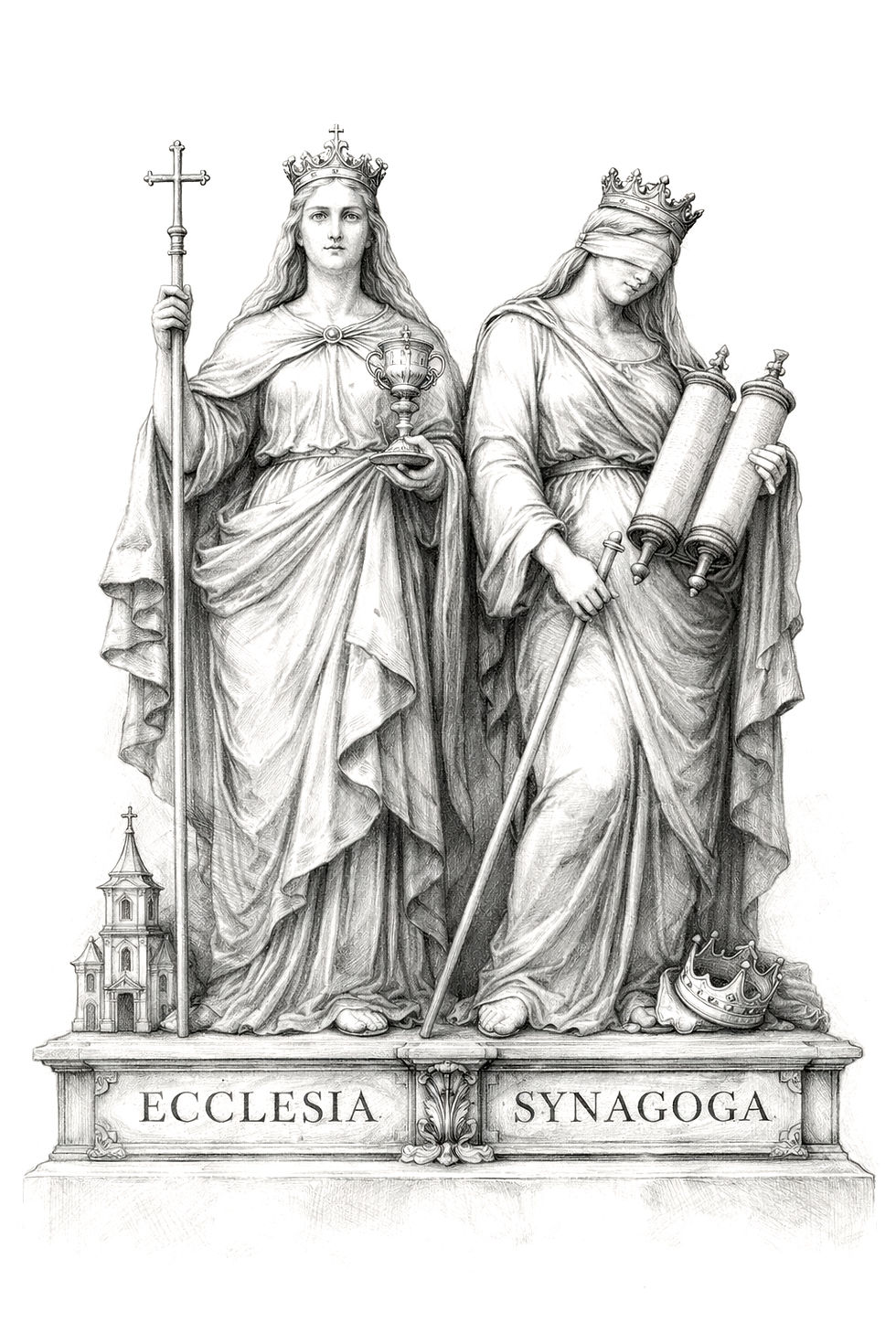
For centuries, select New Testament passages have been torn from their Jewish religious and historical context and pressed into the service of antisemitic theology and the rejection of Israel. Yet the New Testament is a Jewish book—born within Second Temple Judaism, written by Torah-observant Jews (except for Luke, who was not Jewish), and shaped by internal Jewish debate. What later generations recast as universal condemnations were, in their original setting, disputes within Israel itself—distorted over time by mistranslation and supersessionist assumptions. This article reexamines the most frequently cited texts, drawing on linguistic, historical, and Jewish literary sources to restore their meaning within Israel’s enduring covenant. Entire books have been written on the subject, so the answers below are not meant to be exhaustive but a quick response to common misinterpretations and a diving board into deeper study. It may be revised and expanded in the future.
This guide is structured as follows:
Verse: The verse in question.
How This Verse Has Been Misused: How the verse has been misused and misinterpreted.
Concise Answer: A short and easy-to-understand answer to the misinterpretation.
> Detailed Answer:
Click the drop-down arrow to reveal a detailed, referenced answer, delving into the linguistics, historical context, and background of the verse.

1. Matthew 21:43
διὰ τοῦτο λέγω ὑμῖν ὅτι ἀρθήσεται ἀφ’ ὑμῶν ἡ βασιλεία τοῦ θεοῦ καὶ δοθήσεται ἔθνει ποιοῦντι τοὺς καρποὺς αὐτῆς “Therefore I tell you, the Kingdom of God will be taken from you and given to a nation (ethnos) producing its fruits.”
How This Verse Has Been Misused: Used to argue that Israel has been rejected and replaced by the Church.
Concise Answer: The verse doesn’t mean that the Kingdom will be taken away from Israel and given to the nations or the Church. It means that the Kingdom will be taken from the leadership of the first-century generation and given to a generation of Israel that merits the redemption. The text specifically states this in verse 45,
"Now when the chief priests and Pharisees heard his parables, they perceived he was speaking of them." (Matthew 21:45)
Moreover, the word for “nation/people” (ethnos) here is in the singular (i.e., it still refers to Israel). If it were referring to the "nations," it would have said (ethnē), which is plural.
Detailed Answer: (Click the small arrow to the left to reveal the detailed answer)
Let us examine the verse point by point:
“Will be taken from you.”
Yeshua's language mirrors that of the prophet Samuel, who tells King Saul that the kingdom would be taken from him (1 Samuel 15). Immediate context limits “you” (ἀφ’ ὑμῶν) to the current leaders and that generation which refused to repent (21:41–45), not Israel wholesale. Verse 45 explicitly states he was referring to the “chief priests” and the Pharisees, the leaders of the generation, as we stated in the concise answer above.
The transfer is of stewardship to others who will render the fruits (“other tenants”), i.e., a generation of Israel that merits the Redemption.“Taken from you” = removal of stewardship, not removal of identity. The object removed is βασιλεία (Kingship/authority) — not covenant, not election, not “Israelhood.”
“Given to a Nation”
In Biblical Greek, the word for “nation” is ἔθνος (ethnos). Matthew 21:43 uses the singular word ἔθνος (ethnos). If it were plural, it would be ἔθνη (ethne), which would refer to the Gentiles, i.e., the nations.
Singular: ἔθνος — nation
Plural: ἔθνη — nations
Genitive forms often seen in Scripture:
ἔθνους = of a nation [singular]
ἐθνῶν = of nations [plural]
Since it is singular, it means a generation of Israel that merits the Redemption. Israel is explicitly called a גוי goy (nation) in the Tanakh: “I will make you a great nation (goy gadol)” (Gen 12:2; LXX: εἰς ἔθνος μέγα) and “a holy nation (goy qadosh)” (Exod 19:6; LXX: ἔθνος ἅγιον). The New Testament also uses singular ethnos for Israel: “our nation” (Luke 7:5), “the whole nation” (John 11:50–52), “my nation” (Acts 24:17).
Therefore, “given to a people producing its fruits” points to a fruit-bearing people—faithful Israel/the remnant—rather than “the Gentiles” replacing Israel. Thus, the Kingdom’s stewardship goes to the generation/people characterized by covenant faithfulness, not to “the nations” as a replacement of Israel. The pronoun “its” refers to the kingdom, not to a different nation, i.e., “to a people” defined not ethnically but by action—“producing its fruits”.
Parable of the Wicked Tenants
This verse concludes the Parable of the Wicked Tenants (Matt 21:33–46), which itself is a midrash on Isaiah 5, the Song of the Vineyard. In Isaiah 5, Israel is explicitly called God’s vineyard — yet Israel is not replaced. Instead, leaders are judged, exiled, disciplined, and later restored. The parable's context emphasizes judgment and accountability rather than the erasure of Israel's covenantal role. The focus is on producing fruits and proper stewardship, not on replacing one group with another. There is a Rabbinic Midrash which is parallel to the Parable of Yeshua:
"R. Jose the Galilean said: [Let me tell you a] parable: To what may this be likened? To a king of flesh and blood who had a garden in which he built a tall tower. He showed affection for the garden by assigning workmen to it and ordered them to busy themselves with its cultivation. The king thereupon ascended to the top of the tower, from which he could see them, but they could not see him, as it is said, 'But the Lord is in His holy temple, be silent before him all the earth' (Hab. 2:20). At the day's end the king came down and sat in judgment upon them saying, "Let the tillers come forward and receive their wages, let the hoers come forward and receive their wages,"...[until] there remained workmen who had done no work at all. The king asked, "These, what did they do?" ... "Let those who have done my work receive their wages, but those who did not do my work, let them be taken out and executed, for they have rebelled against my command!" (Midrash on Proverbs, Chapter 16, translated by R’ Burton L. Visotzky, Yale University Press, pg. 82)
Dr. David H. Stern comments,
“Yeshua is not saying that the Christians will replace the Jews as God’s people, as many Christians teach. Rather, he is warning that Jewish leaders who do not look out for God’s interests (v. 33–42) will be deprived of sharing in his rulership; and this task, with its rewards, will fall to a different group of Jewish leaders, the Messianic Jewish talmidim caring for Yeshua’s Messianic Community (see 18:18–20). Before long, of course, this community comes to include Gentile Christians, some of whom become leaders too. In Sifre, a collection of midrashim compiled in the 4th century but including much older material, the rabbis, making a similar point in their discussion of Deuteronomy 32:9, told a similar parable about a king who leased a field to tenants.” (David H. Stern, Jewish New Testament Commentary: A Companion Volume to the Jewish New Testament, electronic ed. (Clarksville: Jewish New Testament Publications, 1996), Mt 21:43.)
Conclusion
If this were to support Replacement Theology, it would contradict:
The Torah: “I will not reject them nor annul My covenant with them” (Leviticus 26:44)
The Prophets: Israel ceases to exist only if the cosmos collapses (Jeremiah 31)
Yeshua’s words: The Torah is eternal (Matthew 5:17-19)
Paul’s words: “Has God rejected His people? May it never be.” (Romans 11:1)
Interpreting Matthew 21:43 as a doctrine of supersession not only violates its Jewish and linguistic context but also retrojects later Christian polemics into a first-century Jewish dispute.
2. Matthew 27:25
καὶ ἀποκριθεὶς πᾶς ὁ λαὸς εἶπεν τὸ αἷμα αὐτοῦ ἐφ’ ἡμᾶς καὶ ἐπὶ τὰ τέκνα ἡμῶν
"And answering, all the people said, "His blood be on us and on our children.”
How This Verse Has Been Misused: Matthew 27:25 has been repeatedly weaponized as a collective, hereditary curse—as if “the Jews” (in every generation) accepted perpetual guilt for Yeshua’s death. Few verses in the New Testament have been more tragically misused. Across centuries, this line has been torn from its historical and Jewish context and weaponized to claim that:
All Jews are collectively guilty of “deicide” ("killing God")
Jewish guilt is inherited across generations.
Israel has therefore forfeited its covenant and been replaced.
In the modern era, most major churches have publicly repudiated the idea of collective Jewish guilt for the crucifixion, but the lie nevertheless persists till this day, and has recently skyrocketed after October 7th, 2023.
Concise Answer: In Matthew’s own historical setting, the verse involves a limited crowd in Jerusalem, under corrupt Temple leadership and the Roman authority of Pontius Pilate — not all Jewish people throughout history and time. Moreover, crucifixion was a Roman execution method, not sanctioned by Jewish law. It was ordered by Pilate and carried out by Roman soldiers. In fact, the Mishnah actually reveals that the trial of Yeshua was illegal (Mishnah, Sanhedrin 4:1).
This was instigated at the behest of the corrupt High Priest Annas and Caiaphas, who were in league with Rome (Josephus, Antiquities 18.2.2), whom the rabbis decried as oppressing the people (Pesachim 57a). Ultimately, Yeshua says in John 10:17-18:
“...I lay down my life that I may take it again. No one takes it from me, but I lay it down of myself. I have power to lay it down, and I have power to take it again. This command I have received from my Father.” (John 10:17-18, NKJV)
Yeshua gave his life for each of us. In truth, all of us, both Jew and Gentile, bear responsibility for the death of the Messiah, due to our own sin. But he laid his life down on his own accord to provide life for the world.
For more info, see our article The Guarantor.
Detailed Answer: (Click the small arrow to the left to reveal the detailed answer)

A) First Century Temple Leadership was Corrupt In the Second Temple era, the priesthood and the Sanhedrin were controlled by the Sadducees, who opposed the Pharisees. Not only did they teach a warped theology that denied the resurrection, but they were politically corrupt and in league with Rome. Annas, the High Priest, was seemingly working behind the scenes with the Romans to secure the High Priesthood for himself and his family, including his son-in-law, Caiaphas. Annas and Caiaphas, along with some corrupt "Pharisees", were the ones who instigated the trial of Yeshua,
“Tiberius Nero…sent Valerius Gratus to be procurator of Judea, and to succeed Annius Rufus. This man deprived Ananus of the high priesthood and appointed Ishmael, the son of Phabi, to be the High Priest. He also deprived him in a little time and ordained Eleazar, the son of Ananus, who had been High Priest before, to be High Priest; which office, when he had held for a year, Gratus deprived him of it, and gave the high priesthood to Simon, the son of Camithus; and when he had possessed that dignity no longer than a year, Joseph Caiaphas was made his successor. When Gratus had done those things, he went back to Rome, after he had tarried in Judea eleven years, when Pontius Pilate came as his successor.” (Josephus, Antiquities 18.2.2)
The rabbis decried the Temple leadership as oppressing the people (Pesachim 57a):
“…Abba Saul b. Batnit said in the name of Abba Joseph b. Hanin: ‘Woe is me because of the house of Boethus, woe is me because of their staves! Woe is me because of the house of Hanin, woe is me because of their whisperings! Woe is me because of the house of Kathros, woe is me because of their pens! Woe is me because of the house of Ishmael the son of Phabi, woe is me because of their fists! For they are High Priests and their sons are [Temple] treasurers and their sons-in-law are trustees and their servants beat the people with staves.” (Pesachim 57a, Soncino Press Edition)
The Mishnah and Gemara actually reveal that the trial of Yeshua was illegal, as it was held on the eve of a Festival:
“Therefore, since capital cases might continue for two days, the court does not judge cases of capital law on certain days, neither on the eve of Shabbat nor the eve of a Festival.” (Mishnah, Sanhedrin 4:1, Sefaria.org)
Moreover, the trial was not held in the Lishkat HaGazit, the Chamber of Hewn Stone, it was held in Caiaphas's courtyard (Matthew 26:58, 69, Mark 14:54, 66, Luke 22:55, John 18:15). Strack and Billerbeck comment,
“There can be no doubt that the trial, which ended with the condemnation of Jesus, did not comply with the Pharisees’ rules of procedure as we know them from the Mishnah and Talmud. Therefore, according to the passage in m. Sanh 4.1 above, the trial against Jesus should not have been opened and closed on the same day and it should not have been conducted in the house of Caiaphas but according to the principle המקום גורם in the stone-hewn hall.” (A Commentary on the New Testament from the Talmud & Midrash, Strack and Billerbeck, Excursus: The Day of Jesus’ Death B#1, Volume 2, Lexham Press, pg. 940)
B) Crucifixion was Roman—Pilate has agency and authority
Under the Roman prefecture, capital punishment was Roman business. This is not a method of execution prescribed by the Torah or Jewish law. Roman writings even mention this:
"Nero fastened the guilt and inflicted the most exquisite tortures on a class hated for their abominations, called Christians by the populace. Christus, from whom the name had its origin, suffered the extreme penalty during the reign of Tiberius at the hands of one of our procurators, Pontius Pilatus, and a most mischievous superstition, thus checked for the moment, again broke out not only in Judaea, the first source of the evil, but even in Rome, where all things hideous and shameful from every part of the world find their center and become popular." (Tacitus, the Annals of Imperial Rome, pg 330, Barnes & Noble)
Yet Yeshua reveals that even Rome did not have power over him, except that which was given by the Father. This was necessary for Yeshua to pay the debt of sin for the world.

C) Matthew is an intra-Jewish conflict text, not an anti-Jewish manifesto
Matthew is a thoroughly Jewish Gospel: Torah-saturated, prophecy-arguing, and concerned with the identity of Israel in crisis. The prophetic statements against the First Century leadership and an unrepentant generation were the language of prophetic dispute within Israel. We know this because it is directly mirrored in the Talmud, utilizing the same language and points that Yeshua makes. This is a Jewish dispute in a Jewish world, later ripped from its setting and re-aimed at Jews. Keener writes,
"Matthew probably relates this cry of the crowd to the judgment of A.D. 66–70 that crushed the next generation of Jerusalemites; he would not have approved of the anti-Semitic use to which this verse was subsequently put (cf., e.g., Mt 5:39, 43-44)." (Keener, Craig S.. The IVP Bible Background Commentary: New Testament (IVP Bible Background Commentary Set) (p. 120). Kindle Edition.)
D) The New Testament itself blocks the antisemitic inference
Even within the New Testament, it’s impossible to say “the Jews rejected Jesus” in some absolute sense because:
Yeshua’s first followers were observant Jews.
The crowds in Jerusalem in Acts included at least 20,000 Jews who believed in Yeshua and were zealous for the Torah (Acts 21:20).
Any claim that “all Jews demanded this” collapses under the plain fact that most Jews alive were never consulted, and there were tens of thousands of Jews who were believers in Yeshua.
So the antisemitic leap (“therefore Jews are Christ-killers”) is not exegesis; it’s polemic.
3. John 8:44
ὑμεῖς ἐκ τοῦ πατρὸς τοῦ διαβόλου ἐστέ… “You are of your father the devil...”
How This Verse Has Been Misused: John 8:44 has often been ripped out of its setting and treated as if Yeshua were declaring all Jews (or Judaism itself) “satanic.” That move has fueled a long history of "Christian" anti-Judaism—sermons, polemics, and later popular rhetoric—where the target shifts from a specific disputing group in the account to an entire people across all time.
Concise Answer: A common misconception is that “the Jews” in John means “the Jewish people" as a whole. Almost everyone in John's Gospel was Jewish, except Pilate and the Romans. The Greek word Ἰουδαῖοι (Ioudaîoi) can mean "Jews" or "Judeans" (as contrasted with "Galileans"), and in many Johannine scenes it functions more narrowly as the "Judean authorities."
John 8:44 is not a statement that Jews as a people are “children of the devil.” It is part of a heated intra-Jewish dispute in the first century, Yeshua (who is Jewish) speaking to a specific group in a particular conflict scene. In the Jewish moral vocabulary of the period, calling someone “of the devil” means they are acting in the pattern of lies and murder. Reading it as a timeless condemnation of Jews (or Judaism) is a context-stripping misuse that contradicts both the Jewish setting of the Gospel and ethical boundaries.
Detailed Answer: (Click the arrow to the left to reveal the detailed answer)
A) John 8 is a family dispute, not a racial verdict
The scene in John 8 is a dispute among people who all are all Jews. Second Temple Judaism was not monolithic; it was a world of debate, sectarian boundary-drawing, and sharp rhetoric—Pharisees, Sadducees, Essenes, Zealot movements, pietists, priestly circles, and many local synagogue communities. John 8 belongs to that world of conflict, not to later “Christian vs. Jew” categories.
Why this matters: When readers jump from “a disputing group in the account” to “all the Jewish people,” they commit a category error.
B) “The Jews” in John often means "Judeans" (as contrasted with "Galileans")
In the Gospel of John, the phrase often translated as “the Jews” reflects the ambiguity of the Greek term Ἰουδαῖοι (Ioudaioi), which renders the Hebrew word יְהוּדִים (Yehudim). Both terms can mean “Jews” in an ethnic-religious sense or “Judeans” in a geographic-political sense, depending on context.
In many Johannine passages, Ioudaioi functions primarily as “Judeans”, contrasting the Jerusalem-based population and authorities of Judea with Galileans, among whom Yeshua and most of his followers came. This usage reflects first-century realities.
At the same time, John frequently uses Ioudaioi as a shorthand for the Judean leadership—the Temple elite, priestly authorities, and ruling factions centered in Jerusalem—rather than the Jewish people as a whole. This is clear from the narrative context, since Yeshua, his disciples, and the earliest believers are themselves Jewish, and many “Judeans” in John also believe in him (e.g., John 11:45).
Thus, Ioudaioi in John is not a blanket ethnic label, but a context-dependent term that can mean:
Judeans (geographic/political) in contrast to Galileans (all were Jews)
The Judean leadership or authorities, especially in polemical or judicial scenes.
Recognizing this linguistic and historical nuance prevents anachronistic or antisemitic readings and restores the Gospel’s original setting as an intra-Jewish discourse of the Second Temple period.
C) “Father/Son” language is moral/behavioral in Jewish idiom
In Second Temple Jewish speech, to be someone’s “child/son” can mean to embody their pattern. John 8:44 itself explains the “paternity” claim in behavioral terms: lying, slander, and murderous intent are “devil-like.” So the logic is: If you do the works of the devil, you show that you are acting as the devil’s children. This is reflected in the midrash, which suggests that Cain's father is the evil one. This is not to be taken literally. It serves as a moral evaluation, rather than a genealogical curse.
4. 1 Thessalonians 2:14-15
14 ὑμεῖς γὰρ μιμηταὶ ἐγενήθητε ἀδελφοί τῶνἐκκλησιῶν τοῦ θεοῦ τῶν οὐσῶν ἐν τῇ Ἰουδαίᾳ ἐνΧριστῷ Ἰησοῦ ὅτι τὰ αὐτὰ ἐπάθετε καὶ ὑμεῖς ὑπὸτῶν ἰδίων συμφυλετῶν καθὼς καὶ αὐτοὶ ὑπὸ τῶνἸουδαίων 15 τῶν καὶ τὸν κύριον ἀποκτεινάντων Ἰησοῦν καὶ τοὺςπροφήτας καὶ ἡμᾶς ἐκδιωξάντων καὶ θεῷ μὴἀρεσκόντων καὶ πᾶσιν ἀνθρώποις ἐναντίων
"For you, brethren, became imitators of the churches of God which are in Judea in Christ Jesus. For you also suffered the same things from your own countrymen, just as they did from the Judeans, who killed both the Lord Jesus and their own prophets, and have persecuted us; and they do not please God and are contrary to all men..." (1 Thessalonians 2:14-15, New King James Version)
How This Verse Has Been Misused: 1 Thessalonians 2:14–15 has often been treated as Paul’s “proof” that Jews as a people are evil—“they killed the Lord,” “they displease God,” “they are hostile to everyone,” and “wrath has come upon them.” In later Christian history, those lines were folded into the broader deicide myth (the claim that “the Jews killed God/Christ”) and then used to rationalize contempt, exclusion, and violence against Jews, as if Scripture itself authorized it.
Concise Answer: 1 Thessalonians 2:14–15 has often been misread as a blanket condemnation of Jews, but this ignores both language and context. The Greek term translated “Jews” (Ioudaioi)—as the New King James Version itself implies—can mean “Judeans,” not the Jewish people as a whole. Paul is making a parallel, not an accusation: just as Jewish believers in Judea were persecuted by their own countrymen, so Gentile believers in Thessalonica were persecuted by their own countrymen. This is an observation about localized, intra-community persecution, not an ethnic or theological judgment on all Jews. Paul, himself a Jew, consistently affirms Israel elsewhere (e.g., Romans 9–11). Read in context, the passage condemns specific persecuting actors, not the Jewish people as a whole.
Detailed Answer: (Click the arrow to the left to reveal the detailed answer)
A) Paul is writing a letter of encouragement, not an ethnic manifesto
Paul’s purpose in 1 Thessalonians 2 is to comfort a young community under pressure. A fair way to summarize Paul’s intent is:
“Just as some believers in Judea suffered opposition from certain local Judean opponents, you too are facing opposition from your own neighbors. Those who actively try to block the message are accountable to God.”
B) “The Jews” here is best read as a limited group connected to Judea
An important interpretive principle is that “the Jews” does not mean “every Jew,” but "Judeans" (contrasted with Galileans, or other groups) as we explained above. In fact, the New King James translates this verse as follows,
"For you, brethren, became imitators of the churches of God which are in Judea in Christ Jesus. For you also suffered the same things from your own countrymen, just as they did from the Judeans, who killed both the Lord Jesus and their own prophets, and have persecuted us; and they do not please God and are contrary to all men..." (1 Thessalonians 2:14-15, New King James Version)
C) “Wrath has come upon them” cannot responsibly be turned into a timeless curse
1 Thessalonians was written around 50 CE. The phrase reflects the ongoing persecution of the Romans, which would eventually lead to the destruction of the Temple two decades later. It laments Israel's missed opportunity to receive the Geulah (Redemption) and to remain in the exile of Edom.
4. Romans 2:28-29
“A person is not a Jew who is one outwardly...”
How This Verse Has Been Misused: Romans 2:28–29 has often been misread as if Paul were revoking Jewish identity and replacing Jews with Christians—i.e., “Gentile believers are the real Jews now,” while ethnic Jews are reduced to “mere externals.” That reading has fed both antisemitism (“Judaism is empty/legalistic”) and Replacement Theology (“Israel is replaced by a new ‘spiritual Israel’, i.e. "The Church”). This misuse is reinforced by translation and preaching habits that smuggle in words like “real,” “true,” or “only,” making Paul sound like he’s denying Jewishness itself—when those qualifiers are not actually in the Greek text. Finally, Romans 2:28–29 is sometimes isolated from the larger argument of Romans (especially chapters 3 and 9–11) and used to claim that God has rejected or cursed the Jews. Supercessionist readings contradict the larger message of Romans.
Concise Answer: Paul critiques hypocrisy, not ethnicity. Rabbinic Judaism makes identical moral arguments. Paul explicitly affirms Israel’s covenant status in Romans 9–11. Romans 2:28–29 is not Paul saying “Jews aren’t Jews anymore,” and it does not say the Church has replaced Israel. Paul is making a very Jewish point drawn from Torah and the Prophets: God wants “circumcision of the heart,” not outward ritual without inward covenant faithfulness. That idea comes straight from passages like Deuteronomy and Jeremiah. Paul is critiquing hypocrisy and presumption, not erasing Jewish identity; he’s saying that outward markers without inward obedience do not guarantee “praise from God.”
Detailed Answer: (Click the arrow to the left to reveal the detailed answer)
A) “Circumcision of the heart” is not a Christian invention - it comes from the Torah and Prophets
In Second Temple Judaism, the call for an inwardly transformed heart was already foundational. The Hebrew Bible explicitly speaks of heart-circumcision and inner covenant renewal (e.g., Deut 10:16; Deut 30:6; Jer 4:4). Paul is tapping into this existing Jewish theological vocabulary, not inventing a new “anti-Jewish” category. Therefore, Paul cannot be read as “anti-Jewish” here, because his argument is built from Jewish Scripture calling Israel to covenant integrity.
B) Paul’s critique is an argument against reliance on externals (and boasting), not Jewish people as an ethnicity
Jewish texts and teachers regularly critiqued covenant hypocrisy inside Israel. That kind of critique is not antisemitism; it’s covenantal cheshbon nefesh, self-examination. The Rabbis also criticize those who appear as Pharisees, but are not:
אָמַר רַב נַחְמָן בַּר יִצְחָק: דְּמִטַּמְּרָא מִטַּמְּרָא, וּדְמִגַּלְּיָא מִגַּלְּיָא, בֵּי דִינָא רַבָּה לִיתְפְּרַע מֵהָנֵי דְּחָפוּ גּוּנְדֵי. אֲמַר לַהּ יַנַּאי מַלְכָּא לִדְבֵיתֵיהּ: אַל תִּתְיָרְאִי מִן הַפְּרוּשִׁין, וְלֹא מִמִּי שֶׁאֵינָן פְּרוּשִׁין, אֶלָּא מִן הַצְּבוּעִין שֶׁדּוֹמִין לִפְרוּשִׁין, שֶׁמַּעֲשֵׂיהֶן כְּמַעֲשֵׂה זִמְרִי וּמְבַקְּשִׁין שָׂכָר כְּפִנְחָס.
“Rav Naḥman bar Yitzḥak said: That which is hidden is hidden, and that which is revealed is revealed, but in Heaven everything is known, and the great court in Heaven will exact payment from those who wear the cloak of the righteous but are in fact unworthy. The Gemara relates: King Yannai said to his wife before he died: Do not be afraid of the Pharisees [perushin], and neither should you fear from those who are not Pharisees, i.e., the Sadducees; rather, beware of the hypocrites who appear like Pharisees, as their actions are like the act of the wicked Zimri and they request a reward like that of the righteous Pinehas (see Numbers, chapter 25).” (Sotah 22b, The William Davidson Talmud, Sefaria.org)
C) Paul is not saying physical circumcision is “fake” or meaningless
Romans 2:28–29 is often turned into “outward circumcision doesn’t matter.” But Paul’s actual contrast is about visibility vs. secrecy (“in secret… of the heart… by the Spirit”), i.e., what God sees and praises. “Paul is not redefining who is a Jew or what counts as circumcision,” but challenging performative/boastful display. (JJMJS). This aligns with how “heart-circumcision” works in Deuteronomy: it doesn’t cancel the covenant sign; it demands that the sign be matched by covenant reality.
D) Beware the “true Jew” trap
Antisemitic readings of Epistle to the Romans 2:28–29 hinge on inserting words not in the Greek text, such as “merely” or “true,” to imply that Jews are no longer Jews unless they meet a new criterion. Paul does not say this. Rather, he argues that external Jewish identity alone is insufficient without inner covenant faithfulness. This is entirely consistent with Judaism itself: the Torah repeatedly calls for the circumcision of the heart (Deut 10:16; 30:6), and rabbinic literature stresses kavanah (inner intention) alongside mitzvot. Paul is not redefining or replacing Jewish identity; he is reaffirming a longstanding Jewish principle that authentic Jewish life unites outward practice with inward devotion.
E) “By the Spirit, not by the letter” is a Jewish teaching, not an anti-Torah polemic
Antisemitic readings of Romans 2:28–29 collapse when read alongside Judaism’s own ethical tradition. Judaism has never taught that legal observance alone is sufficient; rather, it insists on inner transformation alongside outward mitzvot. Chassidus explicitly teaches lifnim mishurat ha-din—going beyond the letter of the law—as the ideal of authentic service to God. Likewise, Nachmanides (Ramban) famously warns that a person can keep the Torah meticulously and still be a naval birshut haTorah—“a scoundrel within the permission of the Torah.” Paul’s point aligns precisely with this Jewish moral insight: covenant identity is not abolished or replaced, but deepened, requiring inward integrity (lev, kavanah) to match outward practice. Far from condemning Judaism, Romans 2 echoes one of its oldest and most central teachings.
F) In a Nutshell
“Being part of God’s people is not secured by outward badges worn as a shield for sin. God looks at the heart. The covenant sign without covenant fidelity is not what God praises; what God praises is the Spirit-wrought inner reality the Torah itself calls for.” That reading is faithful to the Jewish scriptural background and blocks antisemitic and replacement-theology distortions. As the Talmud teaches,
כׇּל תַּלְמִיד חָכָם שֶׁאֵין תּוֹכוֹ כְּבָרוֹ אֵינוֹ תַּלְמִיד חָכָם.
"Any Torah scholar whose inner self is not like his outer self is not a Torah scholar." (Yoma 72b)
5. Romans 9:6
“Not all who are descended from Israel are Israel.”
How This Verse Has Been Misused: Romans 9:6 is frequently misused in damaging ways. Some readers take Paul to mean: Ethnic/national Israel is no longer Israel; the Church is the ‘true Israel’ now. In practice, this becomes a theological erasure of Jewish covenant identity and often slides into the claim that Jews are “outside God’s people” unless they become Christians. When Romans 9:6 is isolated from its context (especially Romans 9:1–5; 10:1; 11:1–2; 11:28–29), it can be made to sound like Paul is announcing God’s abandonment of the Jewish people.
Concise Answer: This is classic remnant theology, present throughout the Prophets. Israel remains Israel even when some are unfaithful. A similar debate occurs in Rabbinic literature when commenting on Pirkei Avot, which says, "All Israel has a share in the World to Come." The rabbis then debate, "Who is Israel?" Paul never denies Israel’s corporate election. Romans 9:6 is not Paul saying the Church replaces Israel, and it is not a declaration that Jews are rejected. Paul is addressing a crisis question—if many Israelites are not embracing the Messiah message, has God’s word to Israel failed? He answers: No. God’s covenant purposes have always moved through God’s faithful election and promise within Israel (Isaac over Ishmael; Jacob over Esau), alongside the prophetic “remnant” theme—without erasing Israel’s identity.
6. Galatians 6:16
“The Israel of God.”
How This Verse Has Been Misused: Galatians 6:16 is frequently misused in two related ways: It’s often quoted to claim that the Church is “the new/true Israel,” and therefore ethnic Israel no longer matters covenantally (or that God’s promises to Israel have been transferred). Historically, Christian writers began to use “Israel” language to claim the Church as the “true spiritual Israel” (e.g., Justin Martyr’s Dialogue with Trypho). Nevertheless, this Gentile reading of the Jewish text is false.
Concise Answer: The phrase “the Israel of God” (Galatians 6:16) is best understood within Jewish covenant theology, not as a replacement of Israel but as a reference to the faithful remnant of Israel.
Detailed Answer: (Click the arrow to the left to reveal the detailed answer)
A) Paul is writing a letter of encouragement, not an ethnic manifesto
In the Hebrew Bible, Israel is frequently described as having a faithful remnant (She’arit Yisrael), a subset within the nation that remains loyal to God (e.g., Isaiah 10:20–22). This remnant is not a new people; it is Israel refined, preserved by God’s mercy. Paul draws on this same idea when he speaks of “Israel” in a qualified sense—distinguishing between Israel by lineage and Israel living in covenant faithfulness (see above commentary on Romans 9:6).
When Paul speaks of Gentiles being included, he explicitly rejects replacement. In Epistle to the Romans 11, non-Jewish believers are described as wild branches grafted into Israel’s olive tree, not as a new tree. Israel remains the root, and the ultimate Root is the Jewish Messiah Yeshua (who is Jewish). Gentiles share in the nourishment through Israel, not instead of Israel.
Read this way, “the Israel of God” refers to Israel as the faithful remnant within Israel, while also encompassing Gentiles who, by faith, are attached to Israel’s covenantal promises - not through conversion, but through faith in Yeshua (Ephesians 2). The result is an expansion of Israel (which is the mission of Mashiach ben Yosef) without erasure: Israel is not replaced, Jews are not displaced, and God’s promises are not transferred. They are fulfilled through Israel and shared with the nations, exactly as the prophets envisioned.
7. 1 Thessalonians 2:14-15
14 ὑμεῖς γὰρ μιμηταὶ ἐγενήθητε ἀδελφοί τῶνἐκκλησιῶν τοῦ θεοῦ τῶν οὐσῶν ἐν τῇ Ἰουδαίᾳ ἐνΧριστῷ Ἰησοῦ ὅτι τὰ αὐτὰ ἐπάθετε καὶ ὑμεῖς ὑπὸτῶν ἰδίων συμφυλετῶν καθὼς καὶ αὐτοὶ ὑπὸ τῶνἸουδαίων 15 τῶν καὶ τὸν κύριον ἀποκτεινάντων Ἰησοῦν καὶ τοὺςπροφήτας καὶ ἡμᾶς ἐκδιωξάντων καὶ θεῷ μὴἀρεσκόντων καὶ πᾶσιν ἀνθρώποις ἐναντίων
"For you, brothers and sisters, became imitators of the assemblies of God in Messiah Yeshua that are in Judea, because you also suffered the same things from your own countrymen as they did from theirs, who killed both the Lord Yeshua and the prophets, and drove us out. They do not please God and are hostile toward all people." (1 Thessalonians 2:14-15)
How This Verse Has Been Misused: 1 Thessalonians 2:14–15 has often been treated as Paul’s “proof” that Jews as a people are evil—“they killed the Lord,” “they displease God,” “they are hostile to everyone,” and “wrath has come upon them.” In later Christian history, those lines were folded into the broader deicide myth (the claim that “the Jews killed God/Christ”) and then used to rationalize contempt, exclusion, and violence against Jews, as if Scripture itself authorized it.
Concise Answer: 1 Thessalonians 2:14–15 has often been misread as a blanket condemnation of Jews, but this ignores both language and context. The Greek term translated “Jews” (Ioudaioi)—as the New King James Version itself implies—can mean “Judeans,” not the Jewish people as a whole. Paul is making a parallel, not an accusation: just as Jewish believers in Judea were persecuted by their own countrymen, so Gentile believers in Thessalonica were persecuted by their own countrymen. This is an observation about localized, intra-community persecution, not an ethnic or theological judgment on all Jews. Paul, himself a Jew, consistently affirms Israel elsewhere (e.g., Romans 9–11). Read in context, the passage condemns specific persecuting actors, not the Jewish people as a whole.
Detailed Answer: (Click the arrow to the left to reveal the detailed answer)
A) Paul is writing a letter of encouragement, not an ethnic manifesto
Paul’s purpose in 1 Thessalonians 2 is to comfort and steady a young community under pressure. A fair way to summarize Paul’s intent is:
“Just as some believers in Judea suffered opposition from certain local Judean opponents, you too are facing opposition from your own neighbors. Those who actively try to block the message are accountable to God.”
B) “The Jews” here is a limited group connected to Judea
An important interpretive principle is that “the Jews” does not mean “every Jew,” but can mean "Judeans" (contrasted with Galileans), and often meant the "Judean leadership" as we explained above. In fact, the New King James translates this verse as follows,
"For you, brethren, became imitators of the churches of God which are in Judea in Christ Jesus. For you also suffered the same things from your own countrymen, just as they did from the Judeans, who killed both the Lord Jesus and their own prophets, and have persecuted us; and they do not please God and are contrary to all men..." (1 Thessalonians 2:14-15, New King James Version)
C) “Wrath has come upon them” cannot responsibly be turned into a timeless curse
1 Thessalonians was written around 50 CE. The phrase reflects the ongoing persecution of the Romans, which would eventually lead to the destruction of the Temple two decades later. It laments the missed opportunity of Israel to receive the Geulah (Redemption), and to continue in the exile of Edom.
8. Hebrews 8:13
“What is obsolete is ready to vanish away.”
How This Verse Has Been Misused: Used to claim Judaism itself is obsolete. Hebrews 8:13 (“In speaking of a new covenant, he has made the first obsolete. And what is becoming obsolete and growing old is near to vanishing away…”) is often misunderstood as if Hebrews is saying the Torah itself is defective, expired, and should be discarded.
Concise Answer: Hebrews explicitly states it is discussing the Olam Haba, the World to Come (Hebrews 2:5). It says that the fault was with the people, not the perfect Torah. However, the rabbis state that the Torah of this world is vanity in comparison to the Torah of the Messiah, which brings us to the New World. The Torah of this world is passing away because this world of sin and death is passing away. The Torah of this world specifically applies to this world, hence it says, "When a man dies in a tent." (Numbers 19:14) It is "passing away" and "growing old" in the present tense, not "passed away". It says it is "ready to vanish", not "has vanished", which explicitly proves that the Torah of this world is still in force (Matthew 5:17-19). Hebrews then quotes Jeremiah 31, which explicitly affirms Israel's permanence.
Detailed Answer: (Click the arrow to the left to reveal the detailed answer)
A) Hebrews tells you its horizon: “the World to Come” (Hebrews 2:5)
The conceptual map Hebrews is using—this world or age vs. the world to come—is thoroughly Jewish.
“It is not to angels that He has subjected the World to Come, about which we are speaking.” (Hebrews 2:5)
The "World to Come" is the new world of Revelation 21 and 22, where death is no more. Hebrew/Second Temple and rabbinic tradition commonly speaks of the olam hazeh (this world) and ‘olam haba (the world to come).

B) The grammar in Hebrews 8:13 matters: It is“becoming obsolete…near to vanishing” (present tense)
Hebrews 8:13 doesn’t say the Torah “vanished.” It says the first covenant is becoming obsolete and near to vanishing. The reason for its vanishing is that Yeshua's death has triggered the process of the death of death. To understand this, we must understand the Torah Math of how this works:
The evil inclination of man is the root of sin. The wages of sin is death. The result of death is tumah (ritual impurity/uncleanness), which blocks us from fellowship with God. This results in Exile.

The Torah of this world cannot fix the damage of Adam. All of the sacrifices in the Torah are like insulin shots for someone who has diabetes. It returns the 'equilibrium' to the world, and temporarily atones for sin. Hence the necessity to repeat Yom Kippur each year, just as someone must continually monitor glucose levels and administer insulin to maintain that balance. On the other hand, Yeshua's sacrifice cures "diabetes", that is the damage that Adam brought to the world, and removes sin at its root. R' Krentzman says,
“…the need for the mission of Mashiach ben Yosef came about as a result of the sin of Adam. In theory, had Adam not sinned and brought about tremendous spiritual damage to himself and the world, there would not have been a need for the tikun olam efforts of Mashiach ben Yosef in every subsequent generation. Mashiach ben Yosef thus comes to rectify that damage and return mankind to the state of Adam before the sin.” (Yonah as Mashiach ben Yosef, R’ Daniel Krentzman)
The rabbis teach the death of the Messiah the son of Joseph destroys the yetzer hara (evil inclination) within man. This in turn, removes sin. When sin is removed, then death is destroyed. With death destroyed, the exile is truly ended, and Heaven and Earth can fuse into one, which is the Olam Haba, the World to Come (Revelation 21/22).

C) Torah of this world” vs.“Torah of the Messiah”
Rabbinic tradition contains a striking line:
“The Torah that a person studies in this world is vanity relative to the Torah of the Messiah.” (Kohelet Rabbah 11:8)
This does not mean another Torah, God forbid. It means: the Torah’s depth, clarity, and inner light in the Messianic age will so surpass our present grasp that our current learning looks like hevel (vanity, a wisp) by comparison. The Midrash says,
“The Holy One, blessed is He, will sit and expound the New Torah, which He will give through the Messiah. “New Torah” means the secrets and the mysteries of the Torah that have remained hidden until now. It does not refer to another Torah, heaven forbid, for surely the Torah which He gave us through Moshe Rabbeinu, peace be upon him, is the eternal Torah, but the revelation of her hidden secrets is called the “New Torah”...when Adam the first man sinned, God arranged the letters into words, such as, When a man dies in his tent (Num 19:14). For had Adam not sinned, the letters would have arranged themselves into other words. Therefore, in the Olam Haba, the words will return to their primordial state.” (Midrash Talpiyot 58a, cited in the Messiah Texts, Raphael Patai, pg. 256)
For more info, see our article The Torah of the Messiah.

Please see here for our Introduction to the book of Hebrews:
9. Revelation 2:9/3:9
“Those who say they are Jews and are not… a synagogue of Satan...”
How This Verse Has Been Misused: Revelation 2:9 and 3:9 have been among the most abused passages in "Christian" history. Across centuries, preachers and polemicists have lifted these verses out of their historical setting and treated them as if Yeshua were declaring that Jews are satanic. This interpretation directly fueled antisemitism, pogroms, and the theological claim that Judaism itself is demonic.
Concise Answer: The text explicitly says: “those who say they are Jews and are not.” Yet antisemitic readings quietly remove that qualifier and reverse the meaning, as if this were referring to Jews. In the early centuries of the faith under the oppressive Roman Empire, it was illegal for non-Jewish people to be believers in Yeshua. Some of these non-Jews, under Roman pressure, may have claimed to be Jews to escape persecution, and may have informed on other believers. The translation of “synagogue of Satan” is charged with theological meaning as well. The Greek word συναγωγή (synagōgē) is translated elsewhere in the New Testament as "assembly" (see James 2:2). Today, a "synagogue" universally refers to a Jewish house of worship. However, early believers also met in synagogues. John was Jewish, as were many of the early believers. "Satan" refers to the accusative actions—slander, betrayal, and persecution. Far from supporting antisemitism or Replacement Theology, these verses actually defend Jewish believers and expose impostors who weaponized Jewish identity under Roman rule.
Detailed Answer: (Click the arrow to the left to reveal the detailed answer)
A) The text explicitly denies the Jewish identity of the persecutors
The speaker (the risen Jewish Messiah Yeshua) denies that these people are Jews. Any interpretation that applies this phrase to Jews as Jews directly contradicts the grammar of the text. Dr. David H. Stern writes,
"Virtually all the commentators ignore the obvious and straightforward interpretation that Yochanan is talking here about Gentiles who pretend to be Jews...nowhere in the New Testament are unbelieving Jews called non-Jews, although Ro 2:28–29 is sometimes mistakenly brought as evidence to the contrary (see note there). Nor does anything in the present context call for a violent outburst against Jews." (David H. Stern, Jewish New Testament Commentary: A Companion Volume to the Jewish New Testament, electronic ed. (Clarksville: Jewish New Testament Publications, 1996), Re 2:9.)
B) Historical context
Under Roman law, Judaism was a legal religion (religio licita) and enjoyed exemptions from emperor worship and certain civic cults. Followers of Yeshua—especially non-Jewish believers—were increasingly vulnerable. This is evident even in the letters of correspondence between Pliny the Younger to the Emperor Trajan.
Some Gentiles may have claimed Jewish identity in this period to gain legal protection or to distance themselves from persecuted Messiah-believers. Others likely collaborated with Roman officials, informing on Yeshua-followers to demonstrate loyalty to Rome.
In that context, Revelation’s charge of “slander” fits well: informing, denouncing, or accusing believers before Roman authorities—actions that could lead to imprisonment or death. In Judaism, an "informer" was one of the worst sins, as the Jewish Encyclopedia writes,
“Nothing was more severely punished by the Jews than talebearing, and no one was held in greater contempt than the informer. On account of the fact that his deeds frequently caused mischief and even entailed death and destruction, the sages of the Talmud compared the “moser” to a serpent.” (Jewish Encyclopedia on Moser)
Keener writes,
"People were betrayed to provincial officials by delatores, “informers,” and by the early second century it is attested that Christians in Asia Minor were usually charged only when accused by such informers. By the early second century, some Jews in Smyrna were reportedly fulfilling this function against Christians (such as Polycarp). But some believe that simply claiming publicly that Christians were no longer welcome as part of the synagogue community could constitute a form of betrayal; Christians who were not seen as Jewish had no protection against expectations for participation in the emperor cult. On a local level, some could use Christians’ nonparticipation to question their civic loyalty." (Keener, Craig S. The IVP Bible Background Commentary: New Testament (IVP Bible Background Commentary Set) (p. 733). Kindle Edition.)
C) The Translation of “Synagogue”
A coherent and historically responsible reading of the New Testament requires linguistic consistency and theological context. The Greek word συναγωγή (synagōgē) simply means an “assembly” or “gathering.” This is evident in James 2:2, where most modern English translations render synagōgē as “assembly,” even though the passage clearly depicts believers in Yeshua meeting in a Jewish communal setting—what, in first-century reality, would naturally be called a synagōgē. Translating the term as "assembly" softens or de-Judaizes the scene. Yet in Revelation 2:9 and 3:9, translators often preserve the same word as “synagogue,” thereby accentuating Jewishness.
The inconsistency matters because meaning follows usage. If synagōgē in James can mean a general “assembly,” then synagōgē in Revelation can also denote a gathered faction or group, not necessarily a Jewish synagogue as an institution. In Revelation, the phrase is paired with Σατανᾶς (Satanas), which literally means “the accuser” or “adversary,” describing hostile behavior—slander, denunciation, and persecution—not ethnicity. A fully consistent and linguistically neutral translation, such as “an assembly of the accuser” or “assembly of Satan” would immediately remove the false implication that Judaism or synagogues are being condemned. The selective choice to retain “synagogue” in Revelation—while avoiding it in James—creates a skewed theological impression rooted more in later bias than in the Greek text itself.
Finally, even if one retains the translation “synagogue,” the translators should be consistent and translate James 2:2 as "synagogue". This proves that Jewish believers met in "synagogues", which is not surprising to anyone who knows history. The book of Acts has Paul regularly preaching the Messiah in the synagogues,
"Now it happened in Iconium that they went together to the synagogue of the Jews, and so spoke that a great multitude both of the Jews and of the Greeks believed." (Acts 14:1, NKJV)
If one insists on translating Revelation 2:9/3:9 with "synagogue of Satan", the New Testament proves that this accusation is not directed at all Jewish synagogues, but specifically at those who are accusing the believers to the Roman authorities. Yet this is complicated by the words that the accusers are NOT Jewish.
No matter how it is read, antisemitic conclusions still collapse. Yeshua is Jewish. John is Jewish. The apostles and earliest believers were Jewish, and at the time these texts were written, Gentiles were still joining the movement. Indeed, the text itself explicitly targets “those who say they are Jews and are not,” excluding faithful Jews by definition. Theologically, linguistically, and historically, these passages cannot be weaponized against Judaism. Proper translation consistency and contextual reading not only clarify the text—they dismantle antisemitic misuse at its root.

E) Revelation is a Jewish book
The book of Revelation is saturated with Jewish imagery: menorahs, tribes of Israel, Zion, Jerusalem, prophetic symbolism, and covenant language. Its author is almost certainly Jewish, writing to communities that include Jewish and non-Jewish followers of Yeshua facing persecution.
In both Smyrna (Rev 2:9) and Philadelphia (Rev 3:9), the text explicitly comforts faithful believers—many of whom were Jewish—and promises vindication against their persecutors.
It would be incoherent for a Jewish apocalypse to suddenly declare Jews as such to be satanic—especially while affirming Israel’s tribes, Zion, and covenant promises throughout the book.
This brings us to the ultimate conclusion:
The New Testament is Pro-Israel and Pro-Jewish.

The New Testament is Pro-Jewish
Contrary to popular misconceptions, the New Testament repeatedly affirms the Jewish people, Israel’s covenant, and God’s enduring faithfulness to them. Far from replacing Israel, these texts arise from Second Temple Judaism and speaks of Israel’s ongoing election.
John 4:22
“Salvation is from the Jews.” Yeshua affirms that redemption comes through Israel, not apart from her. The covenantal channel remains Jewish.
Matthew 5:17–19
“Do not think that I came to abolish the Torah or the Prophets.” Yeshua explicitly upholds the Torah. R’ Yaakov Emden, known as the Ya’avetz, wrote in Seder Olam Vezuta,
“It is therefore a habitual saying of mine (not as a hypocritical flatterer, God forbid, for I am of the faithful believers of Israel, and I know well that the remnant of Israel will not speak falsehood, nor will their mouths contain a deceitful tongue) that the Nazarene brought about a double kindness in the world. On the one hand, he strengthened the Torah of Moses majestically, as mentioned earlier, and not one of our Sages spoke out more emphatically concerning the immutability of the Torah. And on the other hand, he did much good for the Gentiles (provided they do not turn about his intent as they please, as some foolish ones have done because they did not fully understand the intent of the authors of the Gospels.” (R' Yaakov Emden, Seder Olam Vezuta, cited in Jesus the Pharisee, R' Harvey Falk)
Acts 21:20 “You see, brother, how many tens of thousands of Jews there are who believe, and they are all zealous for the Torah.” Jewish believers remained fully Jewish and Torah-observant. There were, at minimum, 20,000 Jews in Jerusalem who believed and were zealous for the Torah.
Romans 3:1
“What then is the advantage of the Jew? Or what is the benefit of circumcision? Much in every way! First of all, they were entrusted with the oracles of God.” Paul anticipates a misunderstanding from Romans 2 and immediately reaffirms Jewish covenantal privilege. Far from diminishing Israel, he insists that Jewish identity and circumcision carry real, ongoing advantage. Chief among these is that Israel was entrusted with the logia tou Theou (“the oracles/words of God”)—the Torah and divine revelation. This passage directly refutes antisemitic or supersessionist readings.
Romans 11:1
“Has God rejected His people? May it never be!” Paul’s strongest possible rejection of replacement theology.
Romans 11:28–29
“The gifts and the calling of God are irrevocable.” Israel’s election is permanent, not conditional or revoked.
Ephesians 2:12–13
Gentiles are described as formerly “strangers to the covenants of promise”, now brought near—not replacing Israel, but joining God's people through the blood of the Messiah.
Revelation 7:4–8
The vision explicitly names the twelve tribes of Israel, affirming Israel’s identity and role even in the Last Days.
Conclusion
The New Testament does not erase Israel. It does not replace Israel with the "Church". Its authors were Jews, its Messiah is Jewish, its theology is covenantal, and its hope is rooted in Israel’s restoration. Every non-Jewish Christian and believer should stand with the Jewish people. When read within its historical and Jewish context, the New Testament emerges not as anti-Jewish, but as deeply pro-Israel and faithful to God’s eternal promises.
Am Yisrael Chai Od Avinu Chai
Od Yosef Chai
David HaMelech Chai Vekayam Od Yeshua Chai


Comments